Deewana –When Sonu Nigam Redefined Indian Pop Music

Updated: Feb 2
Year of Release: 1999
Album: Deewana
Lyricist: Faaiz Anwar
Composer: Sajid–Wajid
A year that witnesses a US President being tried in court. A year that introduces the Euro as a single currency for Europe, minus the United Kingdom. A year that sees The Matrix hit the big screen, redefining special effects in cinema. A year that has the entire world paranoid about the millennium bug.
And a year that quietly, but decisively, establishes Sonu Nigam as a pop artist to be reckoned with.
By now, Sonu is already a household name, thanks to Sa Re Ga Ma. Songs like ‘Sandese Aate Hain’ and ‘Yeh Dil Deewana’ have firmly cemented his position as a leading playback singer. But playback success and pop stardom are two very different things. With Deewana, Sonu bridges that gap, and how.
Bhushan Kumar of T-Series wants to make a private album and approaches lyricist Faaiz Anwar, asking him to write eight songs. Faaiz does just that. An interesting bit of trivia here: the song ‘Dil Se Dil Tak Baat Pahunchi’ draws its inspiration from Amit Kumar’s much-loved ‘Bade Achhe Lagte Hain.’
Once the songs are written and composed by Sajid–Wajid, Bhushan first asks Kumar Sanu to sing them. Two songs are recorded. But due to certain differences, Kumar Sanu refuses to sing the rest. The project then comes to Sonu Nigam.
What follows is one of those sliding-door moments in Indian music history.
When Deewana releases, critics are unimpressed. In Sonu’s own words, “When I did my album Deewana, everyone thought it would flop. No playback singer’s album had done well till then.” The reviews are scathing. “Such a boring album, such a dull album, it’s never going to do well,” he recalls in a later interview in 2006.
They could not have been more wrong.
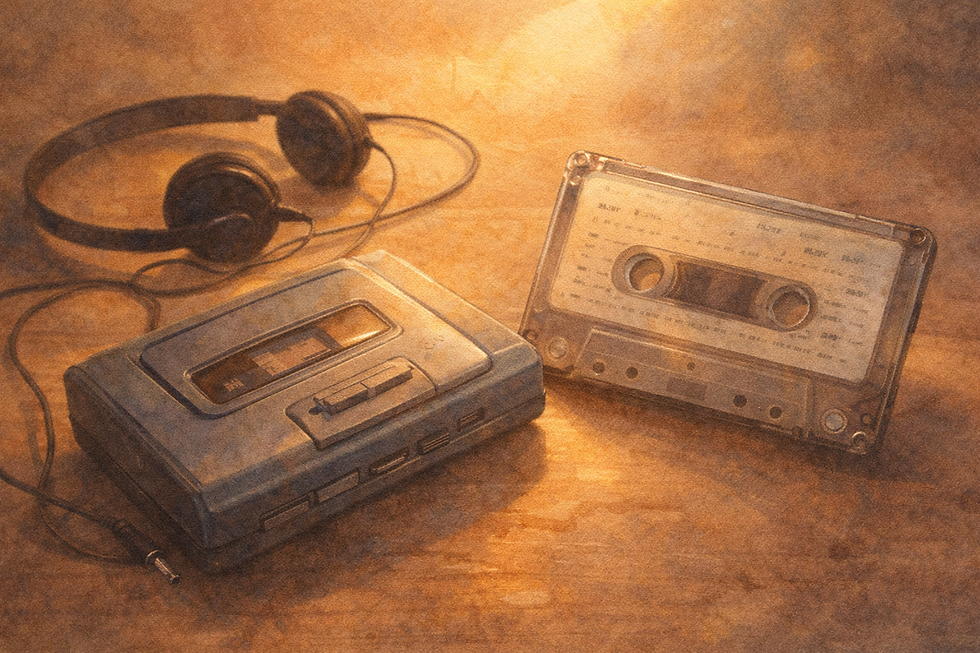
Deewana goes on to sell a staggering one crore cassettes, creating history in the world of Indian private music. At a time when private albums were still seen as risky vanity projects, Deewana proves that they can be both artistically and commercially viable. It is no exaggeration to say that every teenager, every car, every house in the country seems to own a cassette or CD of the album.
The title track ‘Deewana Tera’ becomes the emotional and cultural anchor of the album. Its soft, romantic melody and Sonu’s unmistakably warm voice give Indian pop a new template, gentle, melodic, sincere. The visuals associated with the song, along with the sheer intimacy of listening to it on loop, only add to the frenzy. A crush culture is born and girls swoon over Sonu Nigam's songs all over again.
Years later, even film actress Kangana Ranaut admits to being one of them.“Sonu Sir, I have to tell you, when I was in school, hum logon ko kitna craze tha aapke woh Deewana album ka… hamaare first crush, Sonuji… Jab gaana aaya tha, ‘Deewana Tera, Tujhe hi Bulaye,’ toh hum log sab toh paagal ho gaye the… your voice is the voice of romance in India.”
What further amplifies the album’s reach is the fact that every song in Deewana is accompanied by a music video, an unusually ambitious move for a private album at the time.
The album tops the Times Music charts and stays at number one for several months. It becomes the second largest selling private album of its time, after Altaf Raja’s Tum Toh Thehre Pardesi, overtaking even Alisha Chinoy’s Made in India. For Sajid–Wajid too, Deewana proves to be a defining early milestone, establishing their sensibility for melody-driven, emotionally accessible music.
Beyond numbers, Deewana takes on a life of its own. With its soft, romantic songs, it becomes a favourite Valentine’s Day gift. “A lot of people have got married thanks to that album,” says Sonu. “Lot of people have not committed suicide thanks to that album. They meet me, they say – oh my god, your album saved me. Gulshanji had died, Bhushan wanted to stand on his feet, we wanted to be by his side. Sajid-Wajid had become friends with me by then. So those were all good fresh tastes, fresh emotions. Lot of vigour that you want to do something.”
Deewana doesn’t just succeed. It changes the rules. It proves that a playback singer can be a pop icon. That romance can sell without spectacle. And that sometimes, the albums written off as “boring” are the ones that quietly slip into people’s lives, stay there, and refuse to leave.
Subscribe to my newsletter for your weekly fix of humour, quotes, and little nuggets of trivia.
Want to know more about the Author? Click here – https://www.hansawriter.com/get-to-know-me
Keep smiling friends. Life is beautiful. Cherish each moment.
Har pal yahaan, jee bhar jiyo...
© 2026 Hansa Writer. All Rights Reserved.



Comments